Writer in agriculture
and agrifood
Missions
Produce high-quality technical content on agriculture, agrifood value chains, food security, rural development, climate resilience and agricultural policies. Communicate complex concepts in clear, accessible and evidence-based language for governments, NGOs, donors, cooperatives and youth/women groups.
Tasks
Draft policy briefs, analytical reports, concept notes, project summaries and donor proposals
Translate scientific, legal and technical information into actionable recommendations
Conduct literature reviews and synthesize data on agriculture, SPS, nutrition, gender, climate and value chains
Write training materials, manuals, toolkits and communication content for farmers and cooperatives
Produce case studies, success stories and impact narratives for partners and donors
Support advocacy messages and youth engagement documents
Results
20+ policy briefs and analytical documents written for ministries, NGOs and universities
Contribution to projects totaling USD 10M+ in agriculture and food security
Improved visibility for cooperatives (shea, cassava, cocoa) through clear impact stories
Enhanced understanding of agrifood systems among youth and women through accessible training content
Stronger donor engagement thanks to well-structured concept notes and proposals
Tools Used
Microsoft Word, Google Workspace, Canva, Notion, Trello, Zotero, PowerPoint, AI-powered writing tools (ChatGPT/ImageFX for structuring content), Kobo/ODK data for evidence-based writing.
Skills
Technical writing, policy analysis, agrifood research, data synthesis, storytelling, proposal writing, agricultural communication, editing, capacity building, clarity of communication, gender-sensitive writing, youth-focused communication, donor-oriented drafting, and the ability to translate complex agrifood issues into practical insights.
My portofolio
Provide a general summary of the services you provide, highlighting key features and benefits for potential clients.
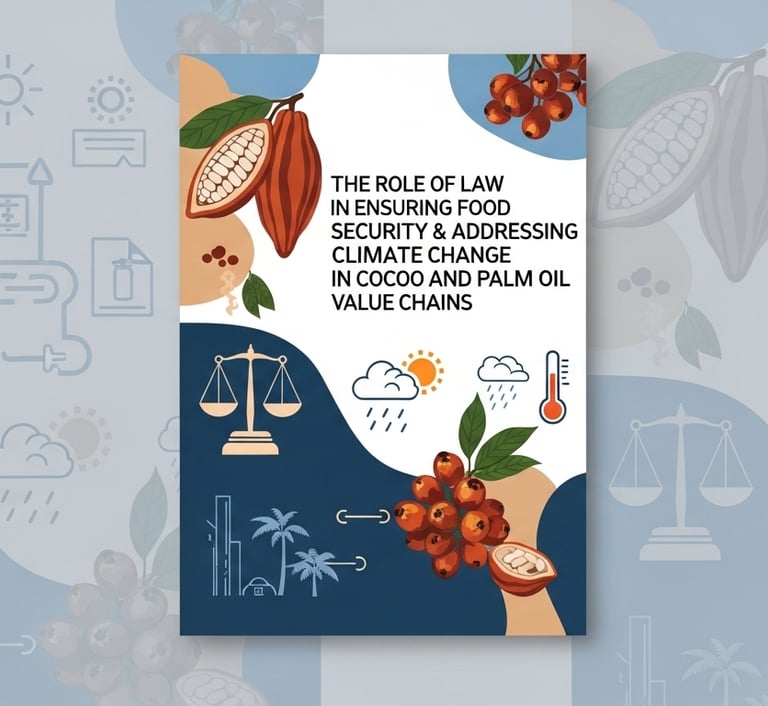
Research Report — The Role of Law in Ensuring Food Security & Addressing Climate Change in Cocoa and Palm Oil Value Chains
Objective: Examine how legal frameworks influence food security and climate resilience in two major agrifood sectors.
Domains: Agricultural law, environmental law, value-chain governance, climate adaptation.
Problem: Cocoa and palm oil farmers face deforestation pressures, low incomes, land insecurity and climate risks.
Work Conducted:
Reviewed 25+ national laws (land, forestry, environment, agriculture).
Assessed compliance with due diligence, agroforestry rules and climate standards.
Analyzed impacts on smallholders’ productivity and food access.
Deliverables: A 40-page report with legal gaps, climate risks, and policy options.
Impact: Provided policymakers with legal pathways to stabilize farmer incomes, reduce deforestation and strengthen food securit
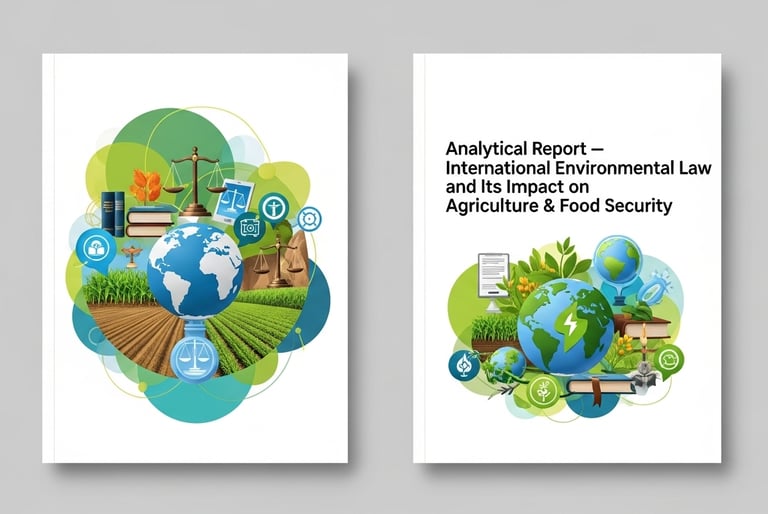
Analytical Report — International Environmental Law and Its Impact on Agriculture & Food Security
Objective: Understand how global environmental rules affect national agriculture systems.
Domains: Environmental law, climate governance, agricultural economics.
Problem: Farmers face stricter climate obligations but lack institutional support.
Work Conducted:
Mapped 40+ global treaties (CBD, UNFCCC, Paris Agreement, UNCCD).
Assessed their implications for yields, input costs, water access and food security.
Identified compliance challenges for developing countries.
Deliverables: A strategic review + 12 policy recommendations.
Impact: Helped ministries align climate commitments with agricultural sustainability.
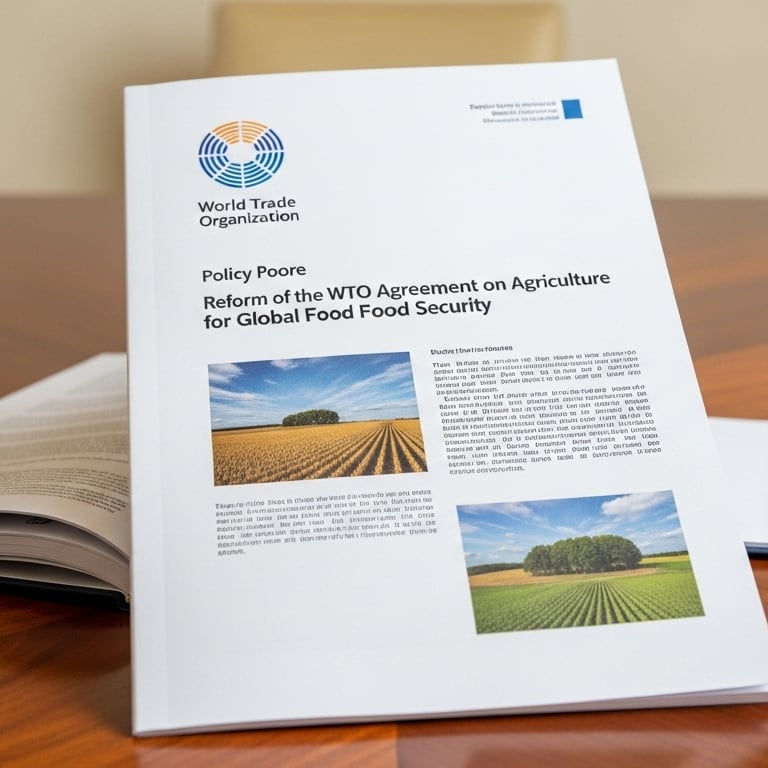
Policy Paper — Reform of the WTO Agreement on Agriculture for Global Food Security
Objective: Propose reforms to strengthen food security in vulnerable countries.
Domains: Trade law, agricultural economics, food security.
Problem: Current WTO rules limit countries’ ability to protect farmers and stabilize food supply.
Work Conducted:
Analysis of domestic support, market access, export competition & food subsidies.
Evaluation of policy space needed for developing nations.
Deliverables: A negotiation-oriented policy paper with 10 reform options.
Impact: Provided evidence-based proposals to balance trade rules with food security needs.
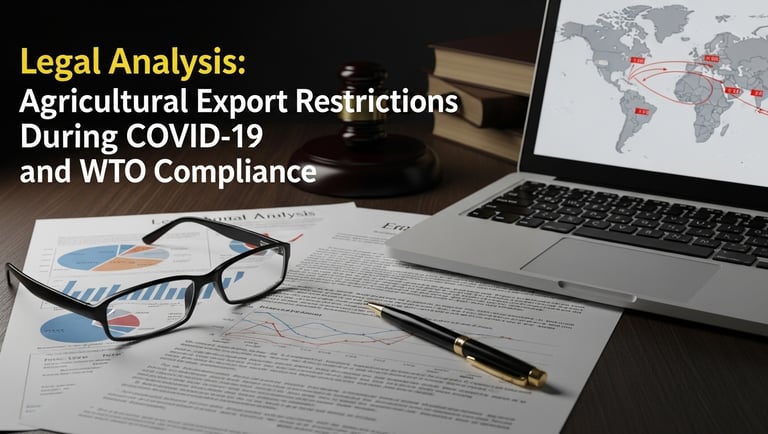
Legal Analysis — Agricultural Export Restrictions During COVID-19 and WTO Compliance
Objective: Assess the legality and impact of emergency export bans.
Domains: International trade, crisis management, food economics.
Problem: Export bans created global shortages and price spikes.
Work Conducted:
Reviewed 60+ export measures from 2020–2022.
Evaluated WTO compliance under GATT XX, AoA & SPS.
Analyzed impacts on global food prices.
Deliverables: Legal analysis + economic impact assessment.
Impact: Clarified what measures are permissible in crises to avoid harming food markets.
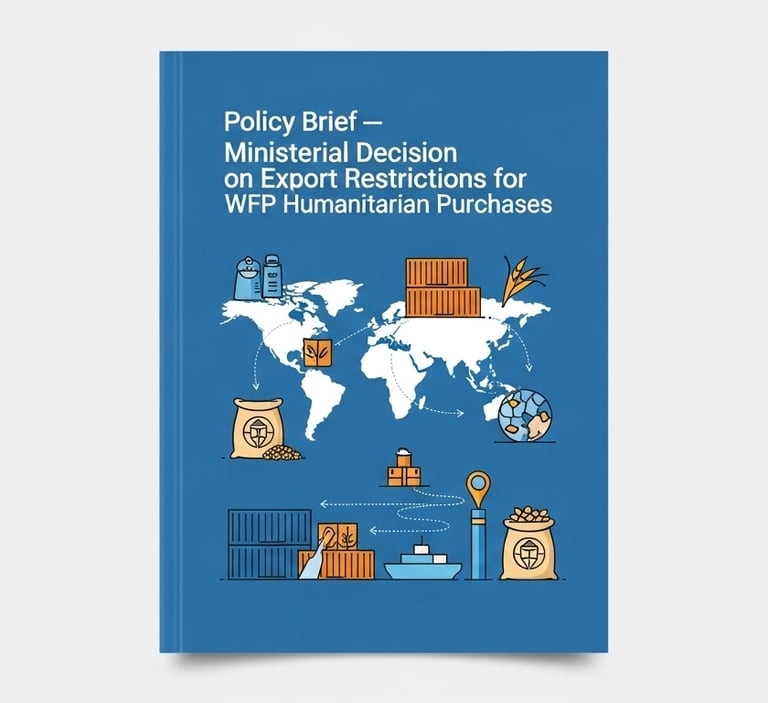
Policy Brief — Ministerial Decision on Export Restrictions for WFP Humanitarian Purchases
Objective: Translate a technical WTO decision into operational guidance for governments.
Domains: Trade law, humanitarian logistics, food security.
Problem: Export restrictions jeopardize emergency food purchases for vulnerable populations.
Work Conducted:
Interpreted legal obligations for WTO Members.
Identified risks of non-compliance.
Provided implementation steps for ministries.
Deliverables: A 4-page policy brief and a compliance checklist.
Impact: Supported governments in exempting WFP shipments, improving crisis response.
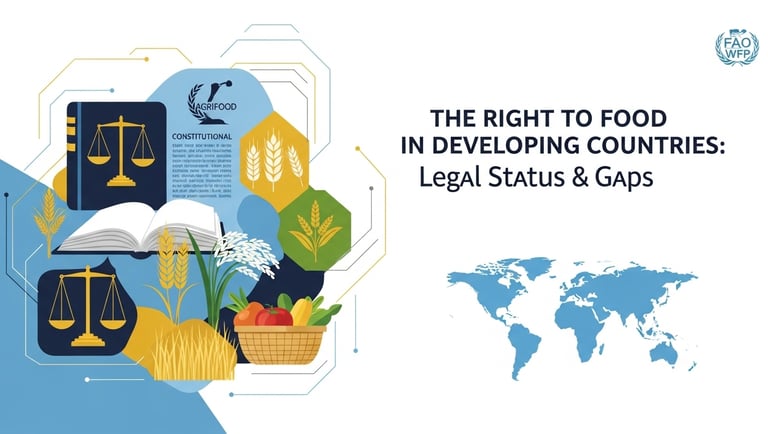
Report — The Right to Food in Developing Countries: Legal Status & Gaps
Objective: Evaluate how national laws protect vulnerable populations’ right to food.
Domains: Human rights law, social protection, agricultural governance.
Problem: Millions lack legal recourses when food access fails.
Work Conducted:
Assessed constitutional provisions, food laws, land rights and safety nets.
Identified institutional gaps affecting women, youth and the rural poor.
Deliverables: A 30-page assessment with legal and institutional recommendations.
Impact: Helped decision-makers improve food rights enforcement and accountability.
Study — Child Rights & School Feeding Programs: Legal and Institutional Dimensions
Objective: Analyze how school feeding contributes to nutrition and children’s rights.
Domains: Child protection law, nutrition policy, education.
Problem: Weak school meal governance undermines children’s health and learning.
Work Conducted:
Reviewed national policies, budgets and legal mandates.
Assessed compliance with UNCRC obligations.
Deliverables: Study + action plan for strengthening school feeding systems.
Impact: Supported reforms improving nutrition for thousands of schoolchildren.
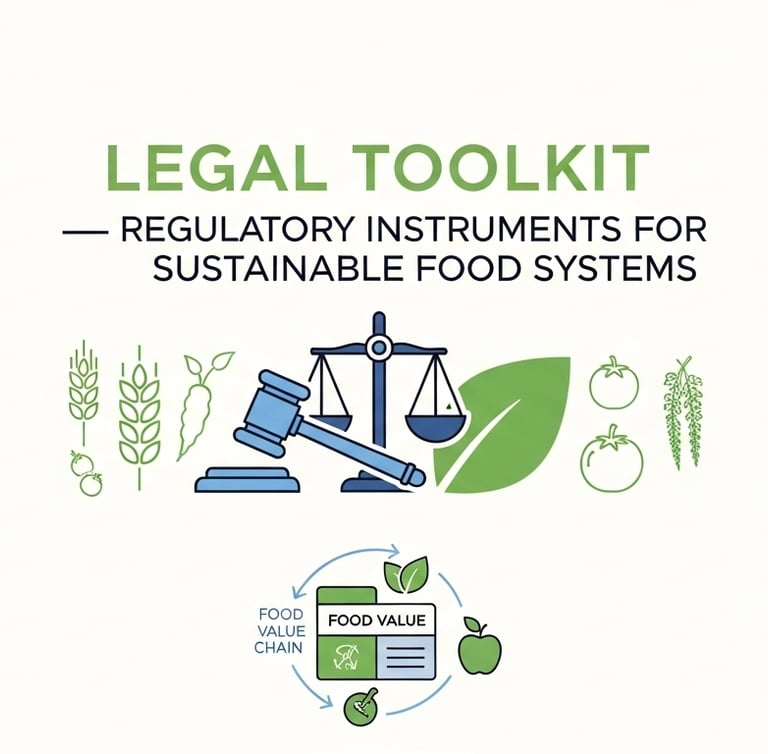
Legal Toolkit — Regulatory Instruments for Sustainable Food Systems
Objective: Provide governments with practical tools to integrate sustainability into food system governance.
Domains: Agricultural policy, food safety law, environmental regulation.
Problem: Countries lack legal coherence on agroecology, climate resilience, SPS, and value-chain governance.
Work Conducted:
Compiled best practices from FAO/UNEP/IFAD.
Created templates for laws, decrees, codes of conduct and incentive schemes.
Deliverables: A toolkit used for training officials and cooperatives.
Impact: Strengthened national capacity for sustainable food-system reforms.
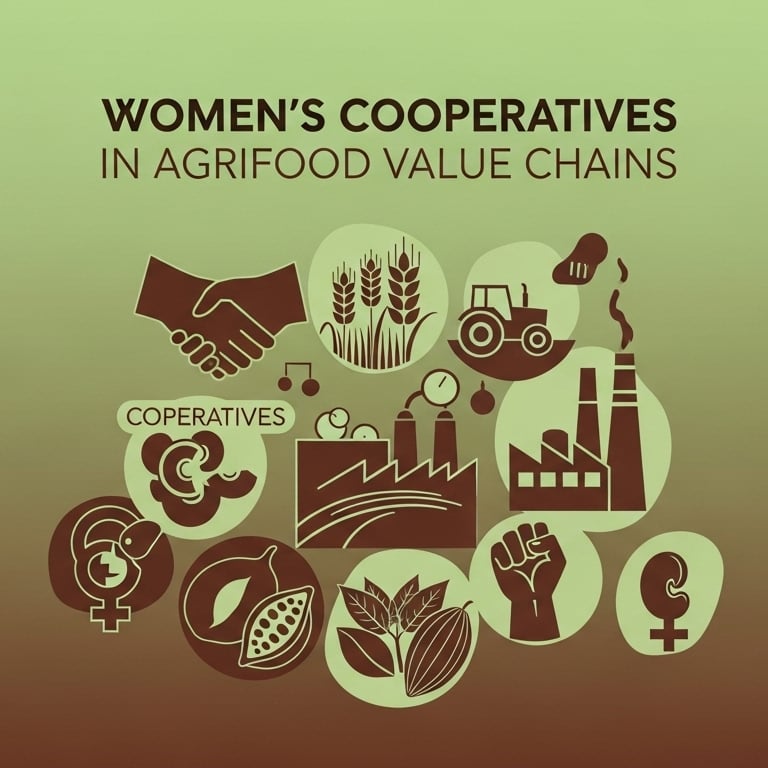
Case Study Collection — Women’s Cooperatives in Agrifood Value Chains
Objective: Document challenges and achievements of women-led production groups.
Domains: Gender, agribusiness development, cooperative law.
Problem: Women face regulatory barriers to markets, SPS compliance and financing.
Work Conducted:
Case studies on shea, cassava, cocoa value chains.
Analysis of legal bottlenecks (certification, SPS, land access).
Deliverables: 12 case studies + practical recommendations.
Impact: Informed programs supporting 1,000+ women entrepreneurs.
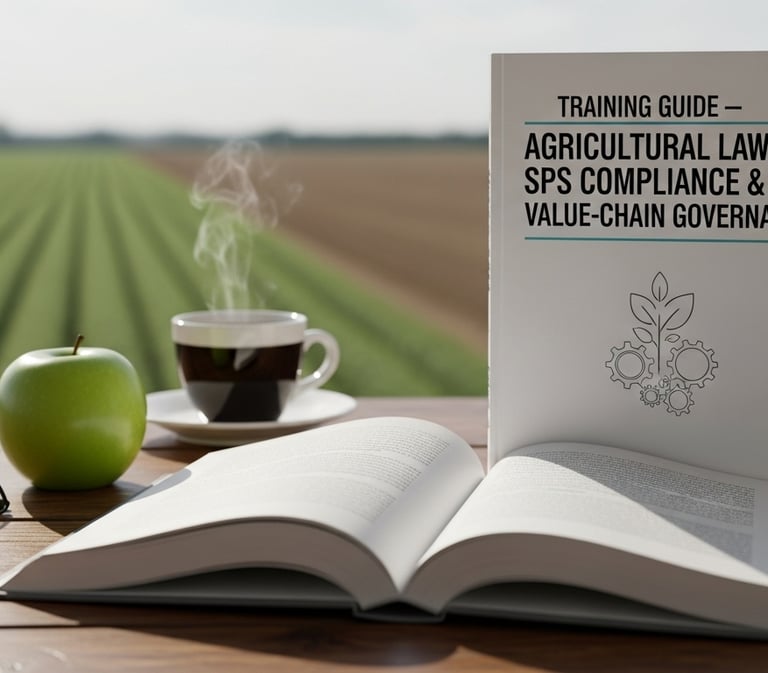
Training Guide — Agricultural Law, SPS Compliance & Value-Chain Governance
Objective: Equip youth and women with practical legal and SPS skills.
Domains: SPS standards, agricultural law, value-chain management.
Problem: Farmers and young professionals lack accessible legal and technical training.
Work Conducted:
Created modules on contracts, SPS, hygiene rules, HACCP, land rights, governance.
Used real examples (shea, cassava, cocoa, livestock).
Deliverables: Complete training guide + workshop materials.
Impact: Strengthened decision-making capacity of 100+ trainees in agribusiness and food systems.
Téléphone
elisabethkouyo@gmail.com
418 455 6209/ CANADA
© 2025. All rights reserved.